New Images Posted at Four Thirds User

Are you, like me, trying to figure out which lenses you might want with your new Olympus OM-D E-M5?
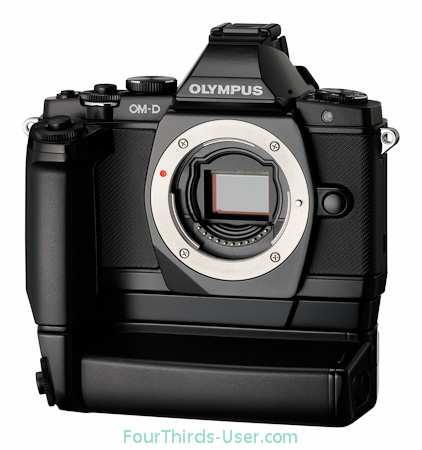
Well, here’s a great place to start: Four Thirds User (By the way, their sample camera came with the battery grip … it looks pretty good!)
They have posted a large sample of full-sized images, RAW and JPG, taken with several different lenses and over the full range of ISO possibilities. All were taken using the Olympus E-M5.
I think the biggest surprise for me was the quality of the photos taken with the 75-300mm lens. Here’s a lens giving you the equivalent of 150-600mm, yet weighing less than a pound and a bit smaller than a coke can – amazing!  From their images, it looks like, even at 300mm, it still produces nice sharp images with good contrast.

Latest Addition to My Bag – Olympus E-PL1

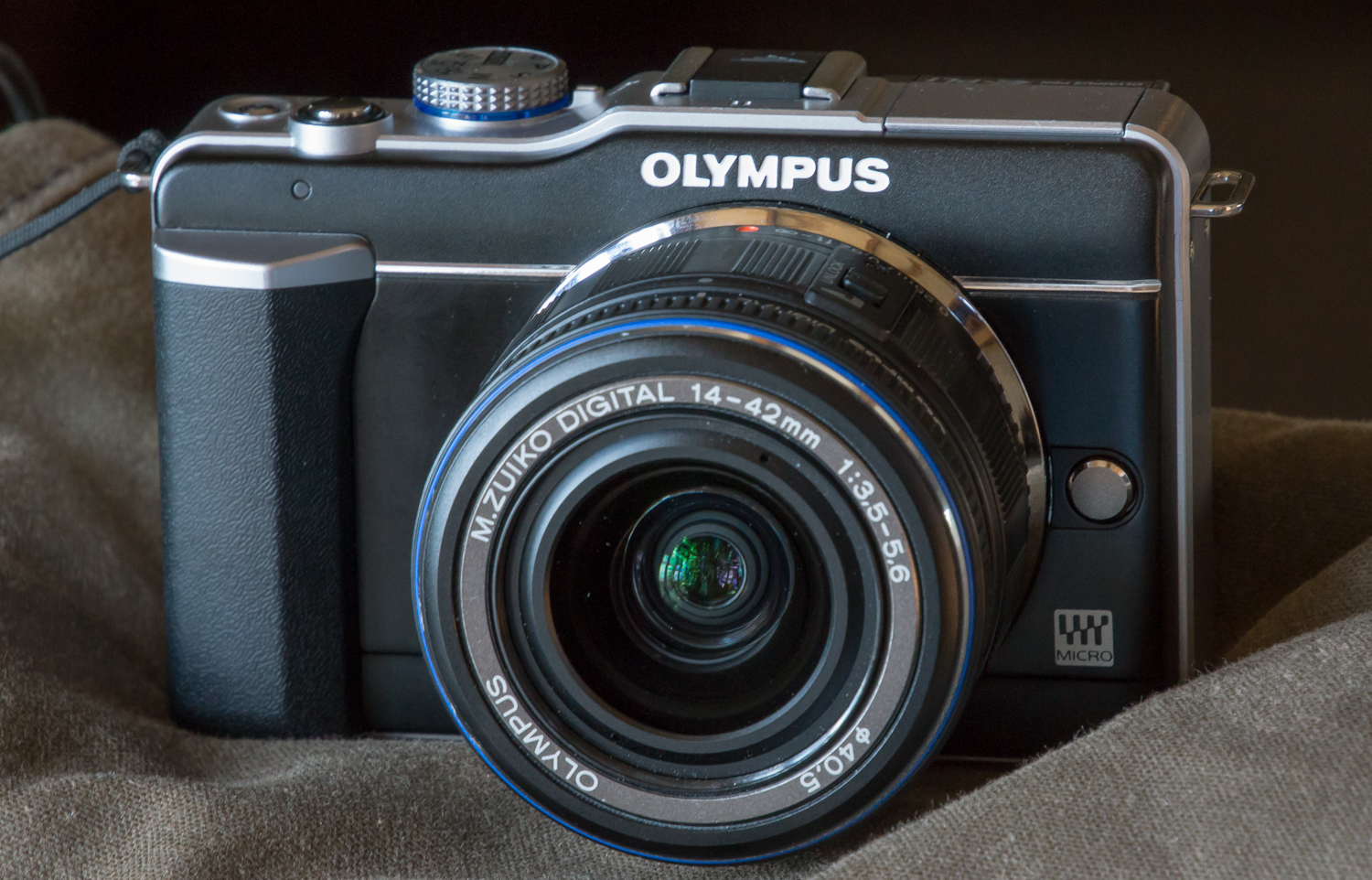
Olympus PEN E-PL1 w/M.Zuiko 14-42mm lens

While waiting for the Olympus OM-D E-M5 to ship (mid-April, hopefully), I decided to get an early start at learning the Olympus system. After doing some reading, I decided on the Olympus PEN E-PL1.

While I haven’t studied every camera available, the E-PL1 has to be one of the best values available, today. On Amazon, it’s only $289 (w/14-42mm lens), and I’ve seen refurbished models at less than $200 … amazing for a camera of this quality and with these features!

The camera is about the same size as the E-M5 and as far as I can tell the menu system is very similar. It has a 12.3 Megapixel sensor, plus it uses the same lenses as the E-M5. Other features include:

  • IBIS (In Body Image Stabilization), so every lens can be stabilized
  • HD Movie mode
  • Built-in (popup) flash with Wireless Control capability
  • Dust Reduction System that vibrates the sensor every time the camera is turned on
  • Many built-in effects and scene modes
  • And much, much more
The extensive menu system allows you to customize the camera so it works the way you do, and the Super Control Panel makes it so easy to change most of the common settings, like ISO, White Balance, Picture Effects, Auto-Focus Mode, Metering, Image Quality, and others.
After just two days, I don’t feel qualified to do a complete review of this wonderful little camera, but I’m sure you can tell I really like what I’m seeing, so far. I think the E-PL1 is going to be a perfect complement to the E-M5 once it arrives.

Now, after getting my hands on this little beauty, I’m even more excited about the E-M5!

For Me … It’s the Olympus OM-D E-M5

Okay, the votes are all in (okay – “the” vote is in – mine) and I’ve decided on the Olympus E-M5.


I’ve read and studied and pixel-peeped every online source I could find and the E-M5 will be my next camera. The reasons are several and varied and no indication of which camera might be better for you or someone else. The perfect camera has yet to be built, so every camera includes a series of compromises in one area or another.


Here are some of the main reasons I’ve decided to go with Olympus:

  • Size: The size of these newer ILC (Interchangeable Lens Cameras) appeals to my sense of carry-ability. With a smaller lens, the camera will literally fit in my coat pocket.
  • Resolution: At 16 Megapixels, it’s no where near the top that is available, today, but still produces images that can be printed very large.
  • Image Quality: This has yet to be completely tested, but DPReview.com released their “Studio Scene” images which allow you to compare various ISO images against other cameras. In the DPReview tests, the E-M5 appears to compete very favorably with the Sony NEX-5N and Fuji X100 – two cameras that we know produce excellent images. Plus, it looks like it just edges out the NEX-7 at higher ISOs.
  • IBIS (In Body Image Stabilization): As I’ve grown older, I find that my hands just aren’t as steady as they used to be, thus the need for a little help from my camera. With IBIS, “every” lens can be stabilized if needed.
  • Lens Selection: Between Olympus, Panasonic, and now even Sigma, there is a substantial and growing selection  of Micro Four Thirds lenses available. Plus, a small adapter, the MMF-3, allows Four Thirds lenses to be used.
  • Weather/Dust Sealing: I don’t shoot in the rain much, however, a sealed camera is still a good thing – you never know when that next great shot may require you to get wet!
  • Customization: The E-M5’s menu system looks like it is very extensive, allowing the operator to set many camera functions the way they desire, not how the manufacturer thought it should be. Also, it has 4 User Memories for storing frequently or preferred settings.
  • Price: I’d love to have a Nikon D800, Canon 1DX, and the Fujifilm X-Pro1 (and others) but, like many, I have a budget. 😦 And while this camera is NOT cheap, it does work for me … after I sell a few things! 🙂
Of course, there are so many features and they’ve been discussed in depth across the internet, so I won’t go into all of them. My list includes just the “Biggies” that affected my decision process and, frankly, the IBIS stabilization system is probably one of the bigger factors … for me.
As always, I invite you to share your thoughts, pro or con, and let me know which way you’re going and why.
Be sure and check out my page Olympus E-M5 Info – it’s loaded with links to many reviews and other websites with pertinent information about this camera.