My Favorite Tools

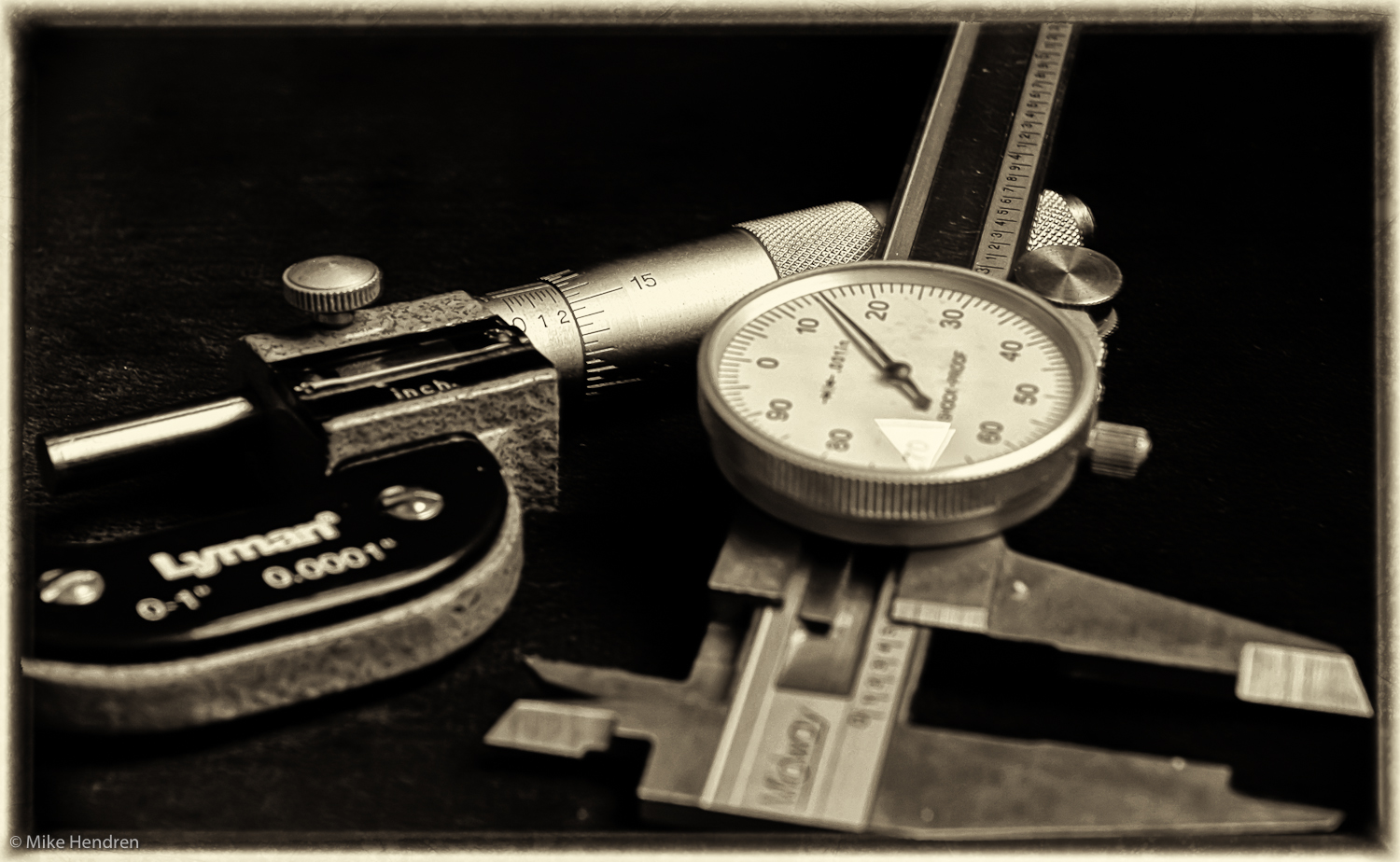
These are great tools, amazingly accurate and completely mechanical – nothing digital here. The micrometer (on the left) is supposed to be accurate to 1/10,000th of an inch! But, I digress.
The “favorite tools” I’m talking about are photography tools. Of course, my true favorites are whatever camera and lens I’m using, but this changes about as often as the weather, so I’ll talk about processing tools.
For me, the “Big Dog” is Adobe Lightroom. It’s where I do all of my organizing, placing images in appropriate folders and tagging them with keywords. But more importantly, it is just an amazingly powerful image editor. It is often where I start and finish my post processing.
However, another feature of Lightroom that I love is it’s ability to easily export an image to something like Nik Silver Efex Pro (used for this image) and then automatically reimport the changes when you finish.
And, Nik Silver Efex Pro is another of my favorite tools, but only one of several in the Nik stable of editors: Color Efex Pro, HDR Efex Pro, and Viveza are also incredibly useful programs and I use them all frequently.
They are a bit expensive, but for me, well worth it.
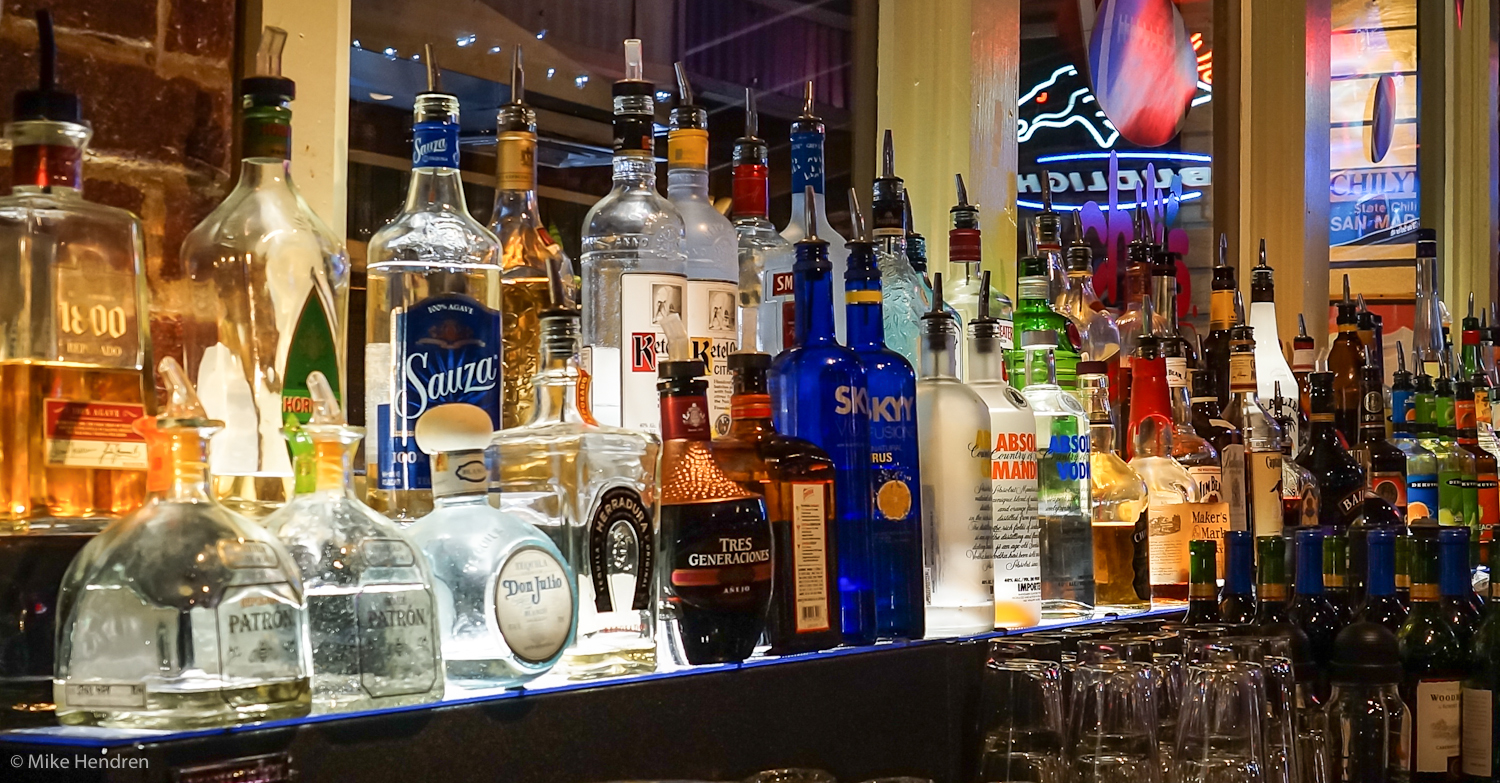
Bar Lighting, Sony, Lightroom 4

I know – what do those things all have in common? Well, not much but I’ll get to that later.

It’s not only common, but almost universal that the lighting in bars will be soft and low. I don’t know if it’s for ambience, privacy (maybe you won’t be recognized), or just to make us all look a little better than we really do. 🙂
Another constant in bar lighting is found behind the bar – the liquor is brightly lit and glowing as if to say, “drink me”. It must work because I’ve always heard that most restaurants survive on their bar revenue, not food sales.

Whatever the reasons for these lighting contrasts, it worked well for me, giving me another chance to test the capabilities of the Sony A65 with the Sony 16-50mm lens.

This was shot with the camera in Sony’s “hand-held twilight” mode, in which the camera sets the ISO (up to 6400) at a high enough level to allow a faster shutter speed. Then, when the shutter is released, it automatically takes 6 exposures and combines them to reduce high ISO noise. So far, it seems to me that sharpness is mainly a function of how still you can hold the camera.

This image was shot at an ISO of 1,000 and came out very sharp with very low noise, too. I’m also happy to report that after just a few images with the 16-50mm lens, I am very pleased – it is producing extremely sharp images with great color and contrast.

Finally, I lightly processed the image in Lightroom 4 (beta). There’s still much to learn about the new LR4, but the sliders just seem to make more sense and work better, the map function is a great addition, you can email images directly from within LR, and of course they’ve now fully integrated the Blurb book making service. There are many other improvements, but these are the ones I noticed on day 1.

Check it out – I think you’ll like it, too.