Stormy Times

Got some new or newly updated photo software? Take another look at some of your old images – you might be surprised at the new possibilities and capabilities. As photo software evolves, the options for photographers to enhance their images in new and interesting ways also improve.

I was going through my images and came across this image of a huge approaching thunderstorm hovering just above and behind my home in Colorado. I had, of course, already done the basic editing by adjusting exposure, color, and contrast but felt it needed something more to really bring out the drama of the scene.

I decided to run it through Nik’s HDR Efex Pro even though I only had the single exposure. HDR Efex did a wonderful job of dramatically increasing the texture in the clouds to reveal the turmoil that was taking place a few thousand feet above us.

So, every once in a while it’s worth our time to take another look at our images and consider how some new bit of software might enable us to improve on what’s already been done.

Luck

There’s a common saying that “Luck equals preparation plus opportunity.” I believe that.

Monument Valley in Arizona has some spectacular monolithic rock outcroppings and it’s best to be there at first light. I was there at dawn that day and got some nice photos of those big rocks they call “The Mittens”, but they were much like those taken by so many other photographers – nothing new.

A bit later in the morning after the sun was well up, I was driving through the park looking for more photo possibilities. I felt very lucky when I saw this hot air balloon just filling and getting ready for lift off.

I skidded to a stop, jumped out of my car and managed to fire off several shots as that colorful balloon slowly and majestically ascended right next to those huge rock formations. Wow, what a sight, but I’m sure the view was even better from inside the gondola as it soared over the valley.

Yes, I was lucky because I had a good camera that I knew how to use and I just happened to be in the right place at the right time (opportunity).

Many fine images are created by dedicated photographers who see a good location, have a creative idea, and then go there time after time until conditions enable them to execute that idea. But, many great images are a result of happenstance…just being there when it happens.

So prepare yourself, get out there, and get lucky!

Balancing Act

There was a big, bright full moon on Feb. 7th, so I hoped to get a great photo, but the clouds intervened. So, I did the next best thing…I took a daylight shot and made it look like a moonlight shot!

The next morning after the sun was well up, about 9:30 a.m., I took this photo. Then the fun started.

I almost always shoot in RAW because it gives me a few more options “after” I get the image on the computer and this was one of those cases. In Lightroom (4 beta), I just changed the white balance setting from “as shot” (which was daylight) to “tungsten”, which resulted in this bluish hue. I think it makes it look like it was taken at night under a bright moon instead of during a bright, mid-morning daytime.

We all know that colors can be manipulated, even with a jpg. However, this can sometimes result in added noise in the image. The big benefit of using a raw file and adjusting the color temp/white balance is that it is non-destructive and introduces no noise into the image.

Another thing I’ve learned is that with the newer Sonys (and many other cameras, I’m sure), is that you can actually preview this effect in the viewfinder before you even take the shot…nice!

Sony a65 w/Sony 16-50mm

The Megapixel Race – Perspective

Numbers have always fascinated me, but sometimes they can be a bit misleading, even though accurate. In the stock market for instance, if you lose 50% ($1,000 down to $500), it then takes a 100% gain to get back to even at $1,000.
A similar thing is happening in the “megapixel race” to bigger and bigger sensors in our digital cameras.
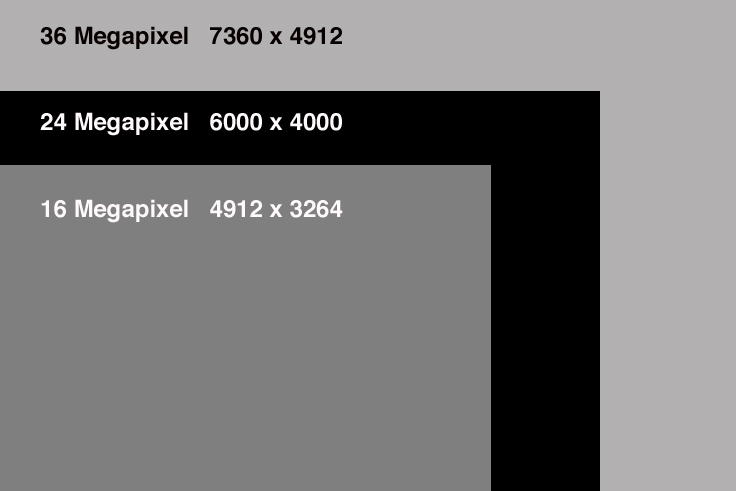
The new Nikon D800 boasts a 36 Mp sensor, which is huge(*see note) when compared to other currently available sensors. But just how much bigger is it? The image above show a comparison between three different sized sensors.
While the D800 sensor is significantly larger, at 50% more pixels than say the Sony NEX-7, that difference doesn’t translate into print sizes. In other words, at 300ppi, the 36 Mp image can print 24.5″ x 16.4″…the 24 Mp image can print 20″ x 13.3″. That’s only about 23% larger (dimensionally). The 16 Mp print would be 16.4″ x 10.9″, which means that the 36 Mp image only prints about 50% larger in spite of having well over twice as many pixels.
I don’t say any of this to detract from the D800…I would give my eye teeth to have one…however, I just find the numbers interesting in how they all fit together in different ways. It’s also interesting to note that, as sensors continue to increase in size, the jump in the number of megapixels will also have to get bigger to have a significant impact on print sizes. In order to get a print 50% than the 24 Mp NEX-7, the sensor would have to be 9,000 x 6,000, or 54 Megapixels!
So, start saving your money now for that next “super” computer you’ll need to be able to work with these huge files. $$$$

*NOTE: When talking about size, I’m strictly talking about resolution. The actual size of the Nikon D800 sensor is a normal “full frame” at 24mm x 35.9mm, while the Sony NEX-7 is an APS-C sized at 23.5mm x 15.6mm.

NEX-7…I’m Loving It!

 I’ve only had the Sony NEX-7 for a couple of days, but I’m liking every part of it. I’ve read a lot of “rave” reviews and, mostly in forums, a lot of negative comments. But, from my perspective, it is a terrific camera!
It has 24 Megapixels with excellent higher ISO capability, 10 frames-per-second, lots of in-camera processing features (my favorite is the auto hdr), and size…it is so small and light! With the 16mm pancake lens it will fit in my pocket.

Some naysayers say that with the larger lenses like the 18-200mm, the size is no longer a factor, but it’s still much smaller and lighter than a normal DSLR with an 18-200 zoom on it, so I can live with that.
Sure, there is a shortage of E-mount lenses available (for now) but there are several adapters that allow you to use many amazing lenses made by other manufacturers. In fact, the Sony alpha-mount adapter even adds phase-detection focusing to the mix!
The other thing is the “Tri-Navi” control system. You pretty much have to try it to appreciate it, but it gives you very quick access to most of the settings you would use while shooting, like:
  • program shift, exposure compensation, and ISO
  • Image quality and auto-HDR settings
  • focus and metering
  • white balance
  • and more
All without ever having to take your eye from the viewfinder…very nice!
And, speaking of the viewfinder, this new EVF (Electronic ViewFinder) is truly amazing. I know, it’s not on a par with a good optical viewfinder in all situations, like bright contrasty light or in low light situations. However, it gives you something that not even the best optical finders can provide – WYSIWYG. In general, what you see in the viewfinder is what the image will look like on your computer. Adjust the exposure or white balance and, instantly, you see how that image will look with those settings. In my opinion, that is very important! Some say, “Pro photographers don’t need that”. Well, maybe not, but I bet even the pros will get more and more enthusiastic about this capability as it is improved and more cameras have it.
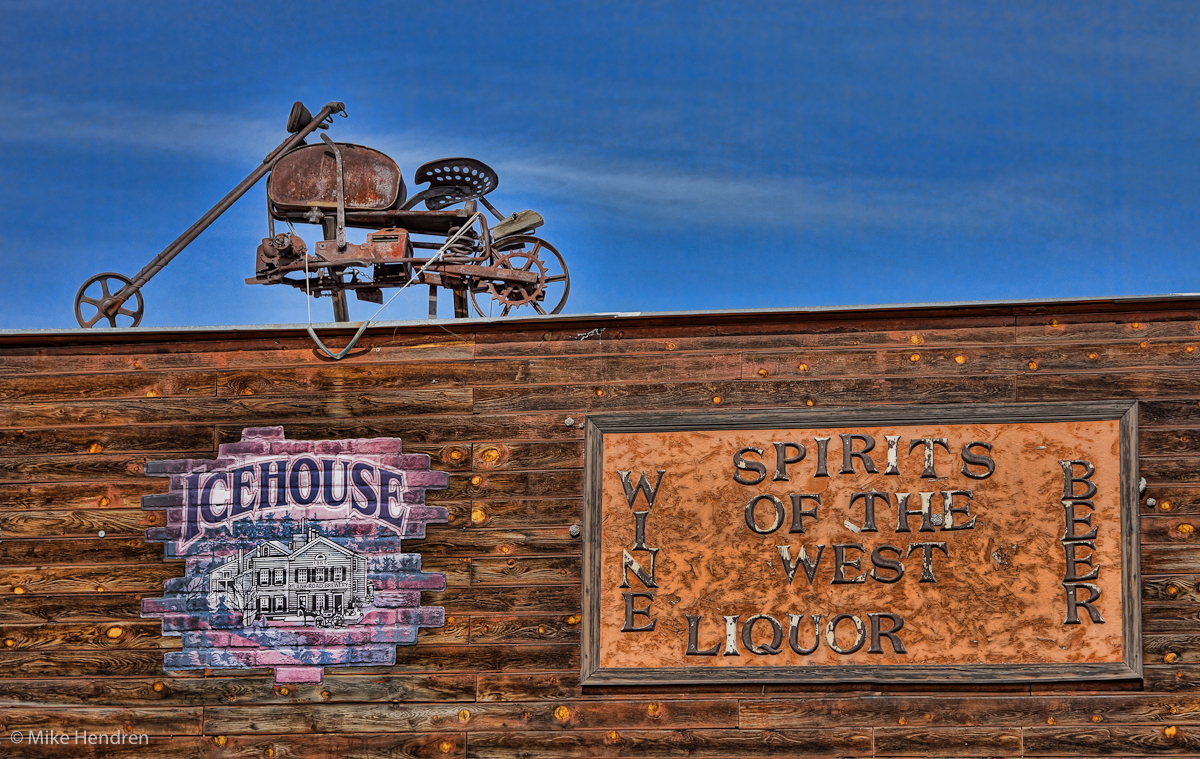
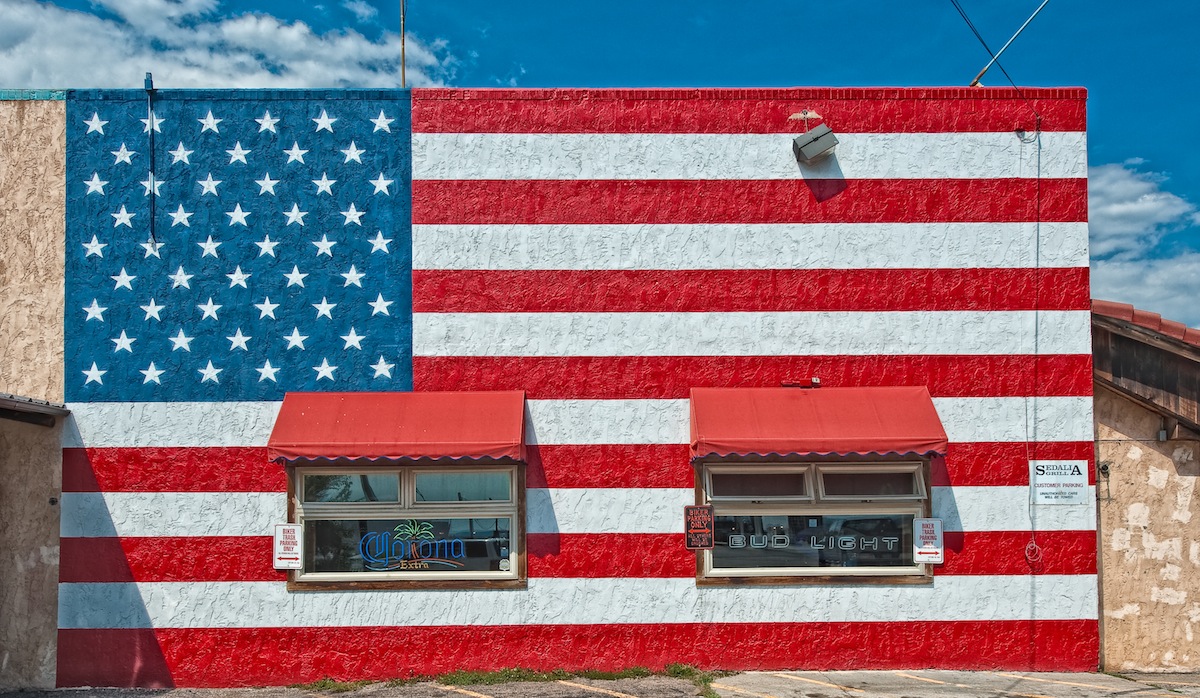
These images are from Sedalia, Colorado. They were shot, using the auto-HDR feature of the NEX-7 with a total of 6 EV spacing in 3 images. Then most of the processing was done with Lightroom 4 (beta) and the Spicify preset in Topaz Adjust.
These were with the new 18-200mm E-mount Sony lens and I’m very happy with it – great color and sharpness.
Thinking of switching cameras? I don’t think the NEX-7 would disappoint you! 🙂
Others WILL be Crushed

The Sedalia Grill in Sedalia, Colorado, is a well known hangout for “bikers”, especially on those warm Colorado weekends that just beg for a ride. They serve good food, cold beer, and some live music at times.
If you do decide to come to the Sedalia Grill and you’re NOT driving a motorcycle, just be careful where you park! The bikers get priority up close, next to the building. 🙂
This sign is on the side of the building: “Biker Parking Only – All Others Will Be Crushed”. I think they’re kidding… but you never know for sure, so I won’t be the one testing it.
*(Note the motorcycle reflection in the window.)


The other thing I like about this place is their east exterior wall. 
As you can see, it’s been painted top to bottom in the American Flag and must be at least 15 feet high and 30 feet long! Now, there is some good old fashioned American patriotism on display!

Finally!

Sony NEX-7 w/16mm f/2.8 lens
I started trying to find the Sony NEX-7 in mid December. Oh, I could find it back then, but it was on Craigslist for about $1,000 over retail…no thanks!
So, finally, about two weeks ago, I read that B&HPhoto was accepting orders and placed mine right away. At the time, the estimate was for delivery in late Feb. or early Mar.
Then, today it came!
The battery is still charging, so haven’t had a chance to put it through its paces yet, but I’m looking forward to that.
I’ve read many positive things and excellent reviews about this camera, but one of the deciding factors was how well the sensor image quality did on DxOMark.com. There, it rated 8th overall, and that was against some very serious competition including the Nikon D3X and some Phase One cameras.
The other main factor for me was size. After owning the Sony NEX-5N for awhile, I fell in love with the compact form factor and could hardly keep my hands off that camera. 🙂 So, now it’s the NEX-7 for me and, hopefully, the end of my semi-compulsive camera switching…well, for a while anyway.