Author: Mike Hendren
Light Painting with an Olympus PEN
![]() |
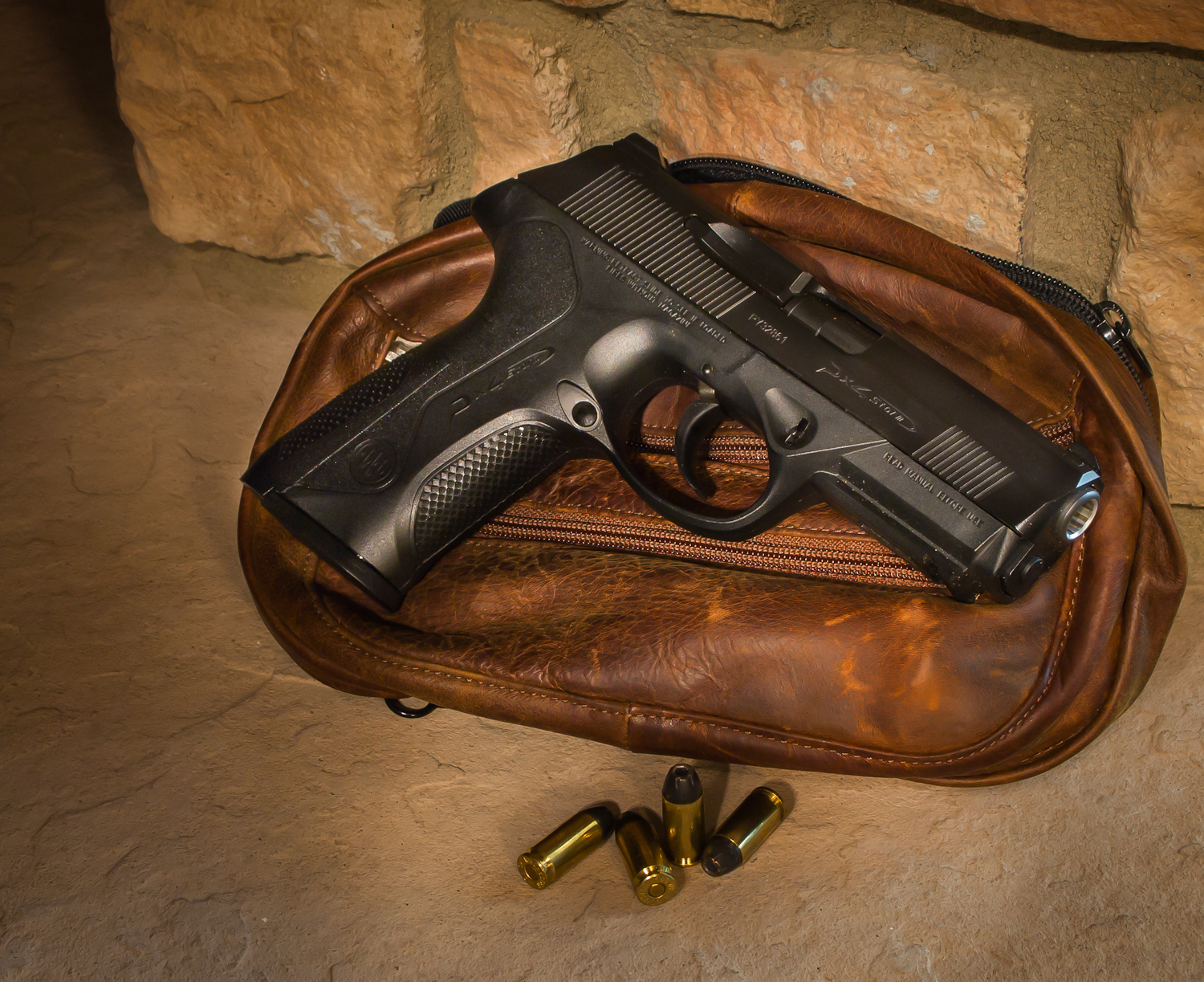
| Light Painting – Beretta Px4 Storm Pistol |
This was another “light painting” session, this time with the Olympus E-PL1.
This is really very easy to do. I set up in a darkened room with the camera on a tripod, set manually at f/8 and 10 seconds, with the drive mode in 2 second timer. Focus was achieved with the flashlight full on and then switched to manual focus. After shutter release and the 2 second timer expired, I illuminated the subject with the flashlight, moving it around and also pointing from different directions to reduce harsh shadows.
I’m thoroughly enjoying the Olympus PEN E-PL1. With care, the image quality is very good, and sharpness is excellent even with the 14-42mm kit lens.
This image was taken in RAW, then processed and tweaked in Lightroom 4 and Nik Viveza
Latest Addition to My Bag – Olympus E-PL1
![]() |
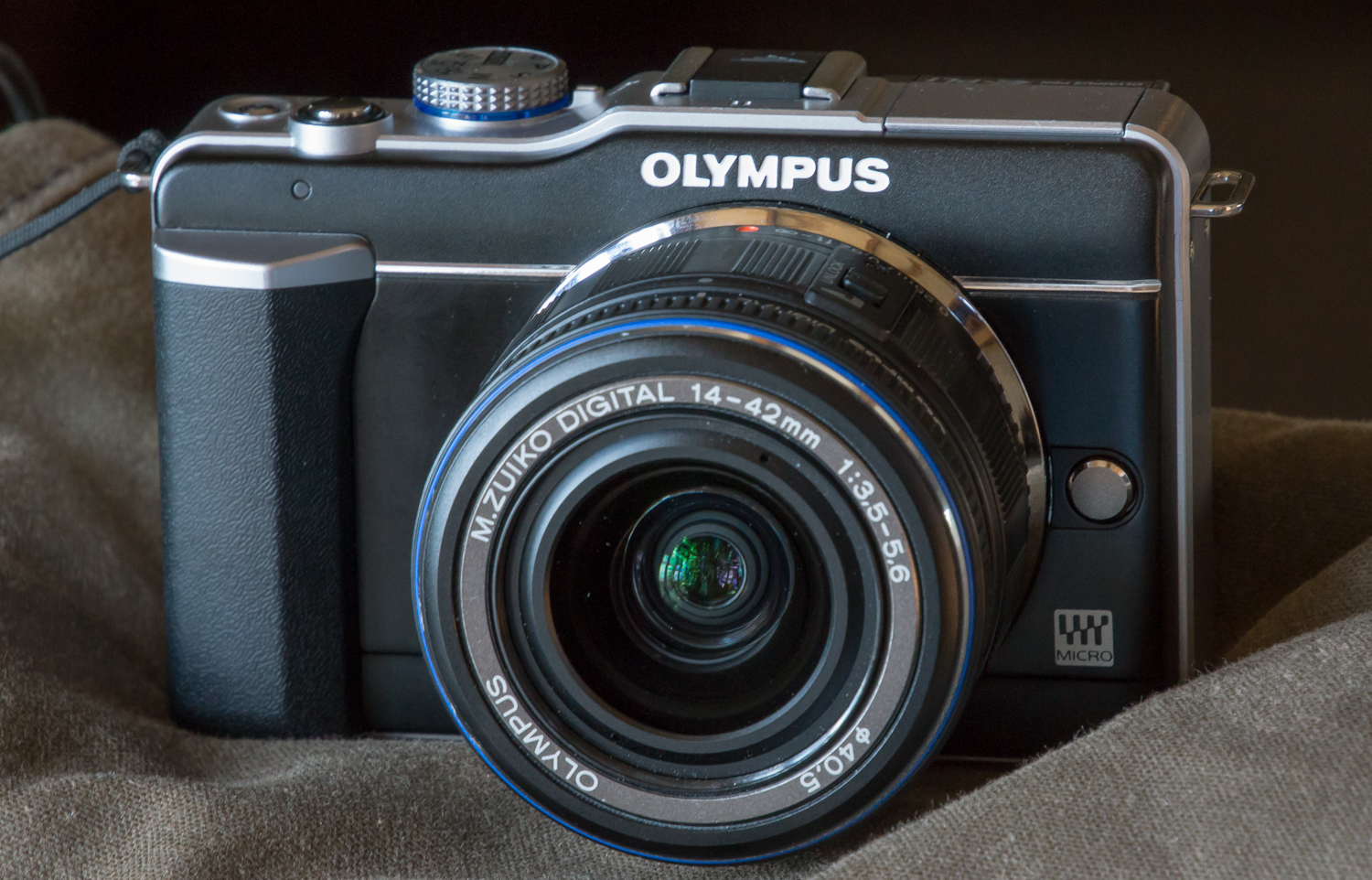
| Olympus PEN E-PL1 w/M.Zuiko 14-42mm lens |
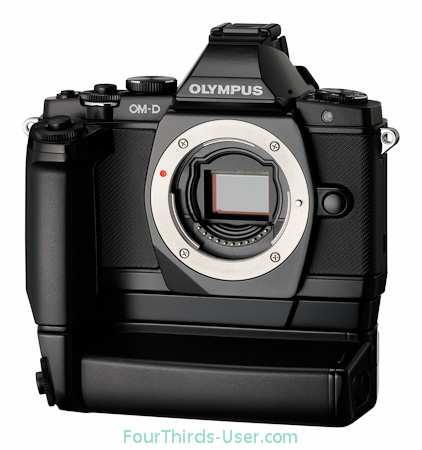
While waiting for the Olympus OM-D E-M5 to ship (mid-April, hopefully), I decided to get an early start at learning the Olympus system. After doing some reading, I decided on the Olympus PEN E-PL1.
While I haven’t studied every camera available, the E-PL1 has to be one of the best values available, today. On Amazon, it’s only $289 (w/14-42mm lens), and I’ve seen refurbished models at less than $200 … amazing for a camera of this quality and with these features!
The camera is about the same size as the E-M5 and as far as I can tell the menu system is very similar. It has a 12.3 Megapixel sensor, plus it uses the same lenses as the E-M5. Other features include:
- IBIS (In Body Image Stabilization), so every lens can be stabilized
- HD Movie mode
- Built-in (popup) flash with Wireless Control capability
- Dust Reduction System that vibrates the sensor every time the camera is turned on
- Many built-in effects and scene modes
- And much, much more
For Me … It’s the Olympus OM-D E-M5
I’ve read and studied and pixel-peeped every online source I could find and the E-M5 will be my next camera. The reasons are several and varied and no indication of which camera might be better for you or someone else. The perfect camera has yet to be built, so every camera includes a series of compromises in one area or another.
Here are some of the main reasons I’ve decided to go with Olympus:
- Size: The size of these newer ILC (Interchangeable Lens Cameras) appeals to my sense of carry-ability. With a smaller lens, the camera will literally fit in my coat pocket.
- Resolution: At 16 Megapixels, it’s no where near the top that is available, today, but still produces images that can be printed very large.
- Image Quality: This has yet to be completely tested, but DPReview.com released their “Studio Scene” images which allow you to compare various ISO images against other cameras. In the DPReview tests, the E-M5 appears to compete very favorably with the Sony NEX-5N and Fuji X100 – two cameras that we know produce excellent images. Plus, it looks like it just edges out the NEX-7 at higher ISOs.
- IBIS (In Body Image Stabilization): As I’ve grown older, I find that my hands just aren’t as steady as they used to be, thus the need for a little help from my camera. With IBIS, “every” lens can be stabilized if needed.
- Lens Selection: Between Olympus, Panasonic, and now even Sigma, there is a substantial and growing selection of Micro Four Thirds lenses available. Plus, a small adapter, the MMF-3, allows Four Thirds lenses to be used.
- Weather/Dust Sealing: I don’t shoot in the rain much, however, a sealed camera is still a good thing – you never know when that next great shot may require you to get wet!
- Customization: The E-M5’s menu system looks like it is very extensive, allowing the operator to set many camera functions the way they desire, not how the manufacturer thought it should be. Also, it has 4 User Memories for storing frequently or preferred settings.
- Price: I’d love to have a Nikon D800, Canon 1DX, and the Fujifilm X-Pro1 (and others) but, like many, I have a budget. 😦 And while this camera is NOT cheap, it does work for me … after I sell a few things! 🙂
UPDATE – Olympus E-M5 or Sony NEX-7 ?
I’ve been out of town for a few days and a lot has been happening with regard to the E-M5.
![]() |
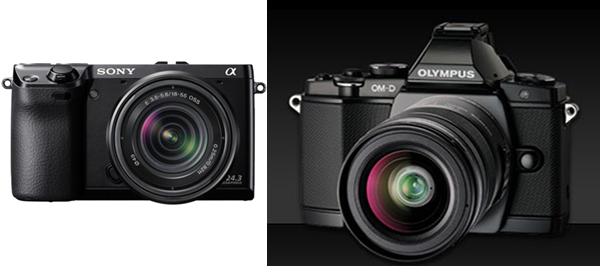
| *Images from manufacturers websites are not to scale |
They are almost identical in size except, of course, for the “viewfinder hump” on the E-M5.
As close as I can tell, the Olympus has 13 “native” lenses available while Sony only has 9, so far. Of course, they both can use a much wider range with the use of various adapters. Still, any adapter adds a bit of bulk so I’m going with the E-M5, here.
The NEX-7 wins this one, hands down, with 24 Mp compared to only 16 Mp for the E-M5. A true test of image quality should wait until the production E-M5 is out and there are more images for us to view. However, that being said, I’m expecting the Sony to be slightly better – we’ll see.
This is so close as to not be a factor with Olympus claiming 9 fps versus Sony’s 10 fps. One review I read, actually clocked the E-M5 at 10 fps, so they are very close.
For me, this is important. As I’ve aged, I’ve found I have a slight tremor in my “shooting” hand, so I will take all the help I can get. Sony does have some IS lenses for the NEX-7, but with the E-M5, every lens is stabilized.
It appears to me that the Olympus has significantly more options to customize various settings. Of course, by necessity, this probably means their menu system may be a bit more complicated but I like being able to decide how I want certain things to work.
NEX-7 doesn’t have it … E-M5 does.
While I’ve found the NEX-7 viewfinder to be excellent, there is one thing that bothers me about it … high noise levels in very low light levels, like shooting stars, for instance. There is almost too much noise to even bother looking through the EVF. What makes me think the E-M5 EVF could be better is its lower resolution. The reason I think this, is that has been my experience using the Fujifilm X100.
The Tri-Navi control system on the NEX-7 is wonderful … except … the top knobs are just too easy to turn accidentally, especially the right one. I find I am often shooting with some “unintended” exposure compensation. The “click stops” just need to be a little bit stiffer.
My other BIG complaint is with the position of the Video button on the NEX-7. I probably average at least one unintentional movie a day, sometimes more. I try to turn the camera off when I’m not getting ready to take a shot, but that is not an optimal solution. These complaints have been loud and numerous around the internet and should be easily fixable with a firmware update, but so far … Sony has not responded.
There may be some serious design flaws in the E-M5, but I haven’t read about them, yet.
CONCLUSION
In this completely biased and unscientific examination, the Olympus E-M5 is the clear winner, even if the unknowns happen to fall to Sony, later.
There are, of course, many other areas of comparison, but these are the ones that caught my interest. I’m sure you all have different needs and wants in a camera, so please feel free to chime in … I suspect I’ll learn something if you do. 🙂

Olympus E-M5 … Looking Pretty Good!
HDR with Lightroom 4

I had originally underexposed this image, using the Fujifilm X100, because I knew I really wanted to get the colors in those clouds, but Lightroom was able to save the photo. The “new” sliders in Lightroom 4 made this possible, using the settings shown here. What surprised me the most was just how much of the shadow detail I was able to salvage from what was an underexposed image. (See the original image, below)